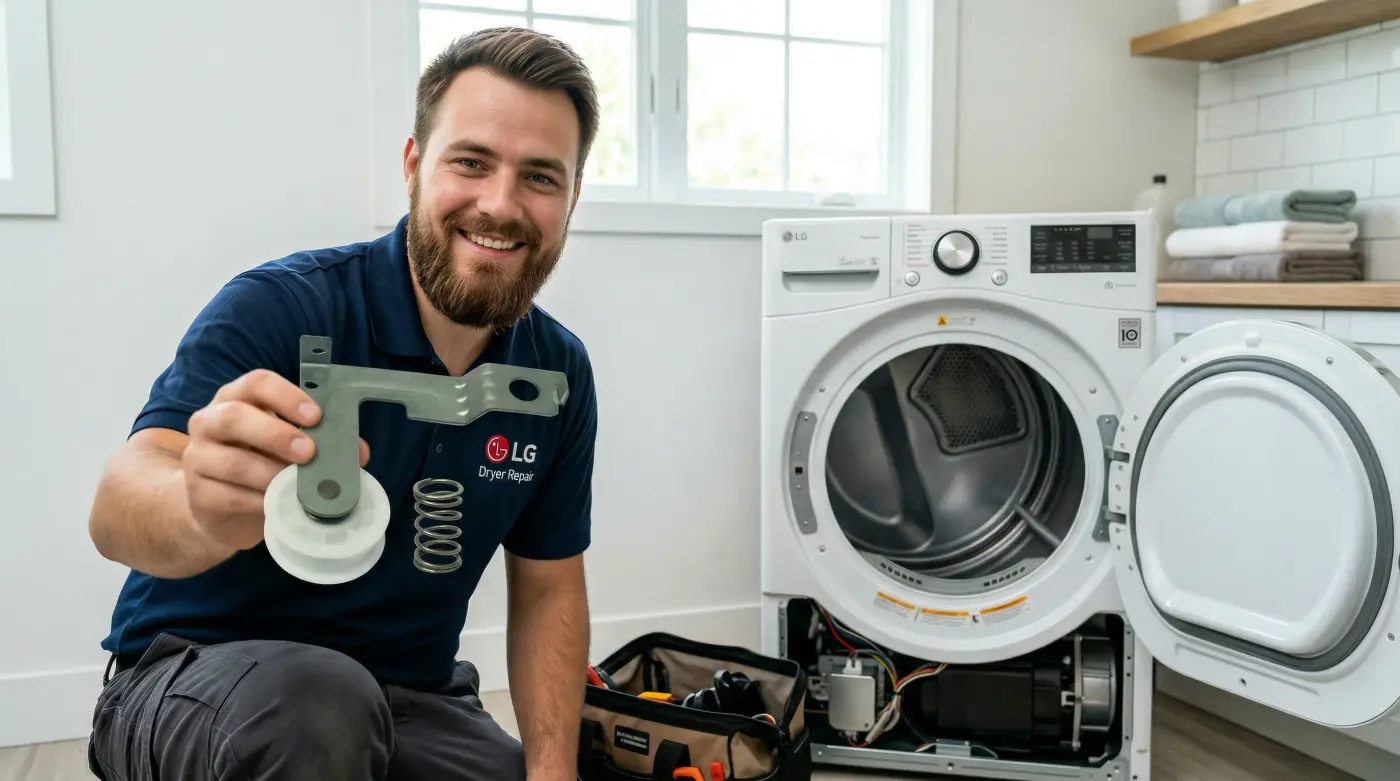
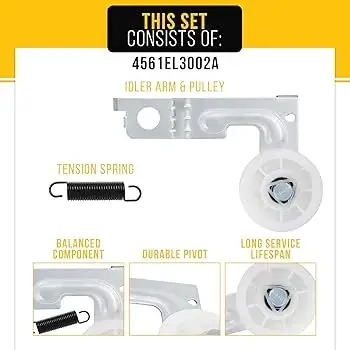
Replacing an LG dryer idler pulley runs $200–260 total and takes our techs about 60–75 minutes — the OEM pulley is $15–25, the rest is labor for correct belt routing and tension. Before we replace it, our LG Dryer Repair techs spin the pulley by hand to confirm the bearing is the source of the squeal — call (323) 990-7550.
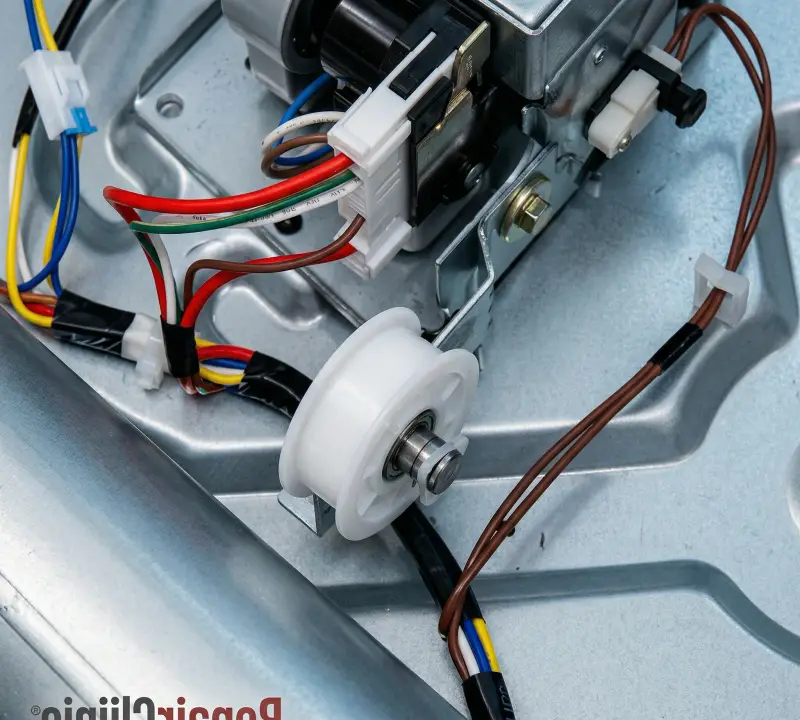
The idler pulley is a small spring-loaded wheel that keeps tension on the drive belt as the drum spins. Most people don't know it exists until it starts making noise — and when it wears out, it can produce some of the loudest squeaking and squealing sounds a dryer will ever make. We get these calls from all across Los Angeles County, Orange County, and Ventura County, from Pasadena to Irvine to Thousand Oaks. It's one of those repairs that seems minor until you understand what happens when you ignore it: a seized pulley shreds the belt in one cycle, and then you're paying for two repairs instead of one.
What a Failing Idler Pulley Sounds and Feels Like
Before we replace the pulley, our LG Dryer Repair techs check the belt and drum rollers too — a pulley that's been squealing for weeks runs the belt under friction heat the whole time, so we inspect the belt's condition and replace it together when it's worn rather than leave you with a second callback.
The classic symptom is a high-pitched squeaking or squealing that starts when the dryer first turns on and either fades after a few minutes or gets progressively worse throughout the cycle. The sound tends to be rhythmic — tied to belt speed, which is faster than the drum rotation itself. Customers in Burbank and Torrance often describe it as a "chirping" that gets louder when the dryer is under load, like when it first starts tumbling a heavy wet load.
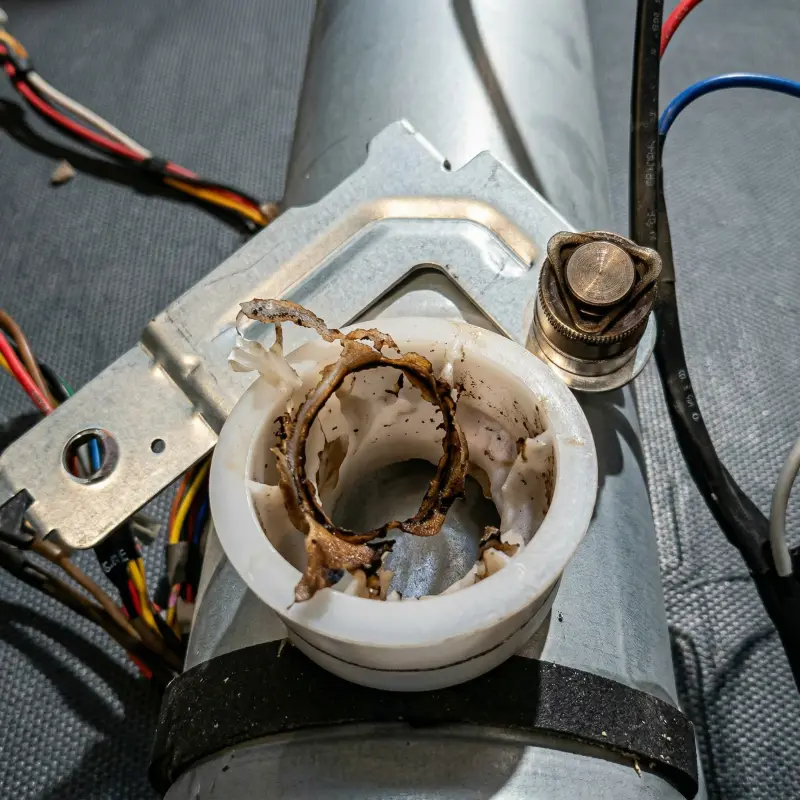
As the pulley bearing deteriorates further, the squeaking turns into a grinding or scraping sound. At that point the wheel has worn through its bearing and is dragging against the belt instead of rolling smoothly under it. The belt heats up from the friction, wears much faster than it should, and eventually snaps. On DLGX and DLEX series models, when the belt snaps from pulley wear, it often falls behind the drum — you open the machine and find the belt sitting loose at the bottom of the cabinet instead of around the drum.
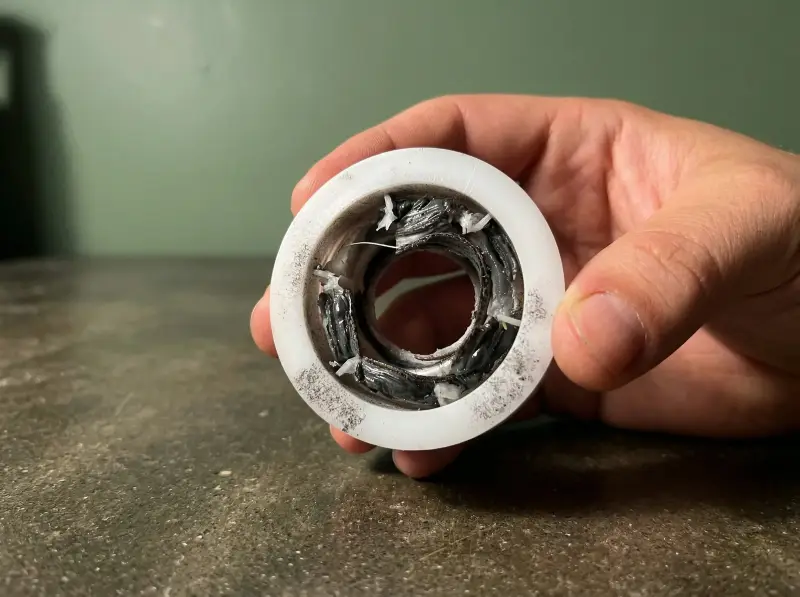
In some cases the pulley bracket itself cracks or breaks rather than the bearing wearing out. That's more common on older machines — 10+ years — where the plastic components get brittle. The result is the same: belt loses tension, drum stops spinning or spins inconsistently.
One useful check before you call us: open the door, disconnect power, and try to move the drum slowly by hand. A worn idler pulley often produces a grinding or catching sensation you can feel through the drum via the belt. A healthy pulley moves freely and quietly.
Why We Almost Always Replace Belt and Pulley Together
This is something we've learned from doing hundreds of these jobs across LA County, Orange County, and Ventura County. If the idler pulley has been squeaking for a while, the belt has been running under uneven tension and friction heat the whole time. We've opened machines in Glendale and Calabasas where the pulley was the original complaint but the belt was visibly thinned from the friction damage — half its normal thickness in spots.
Replacing the pulley and leaving a worn belt means the new pulley runs against a belt that's already compromised. It fails sooner than it should, and you've paid for a second service call that could have been avoided. The belt itself costs $15–25 extra in parts. We'll show you the belt condition on-site and give you our honest read — if it looks fine, we'll say so.
Same logic applies to the drum rollers. All three — pulley, belt, rollers — are in the same area, wear at similar rates on older machines, and are all accessible while we have the drum out. On a machine that's 8+ years old, doing all three together in one visit is almost always the most economical decision. We also check the thermal fuse while we're inside — a belt that's been slipping from pulley wear generates extra heat that can stress the fuse circuit.
The Repair
We pull the top and front panels to access the belt and pulley assembly — on DLEX front-loading models this requires more disassembly than rear-access DLE series units, which adds some time. We photograph the belt routing before we remove anything. LG's specific routing pattern around the spring-loaded idler arm is easy to get wrong from memory, and an incorrectly routed belt either slips immediately or tracks unevenly and wears out fast.
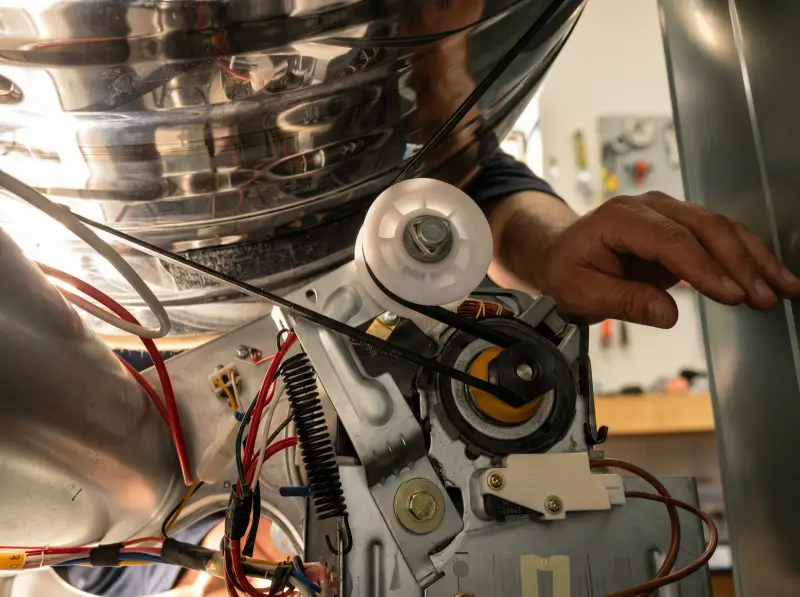
The old pulley comes off its mounting post, the new OEM unit snaps into place on the spring-loaded arm, and we verify the arm tension is correct — too loose and the belt slips under load, too tight and it puts excess stress on the motor bearings. Then we route the belt correctly, manually rotate the drum several times to confirm smooth tracking, and reassemble.
We run a full test cycle before we leave. The squeaking should be completely gone. If there's any residual noise we track it down before we close up the machine — we don't leave until it's running quiet.
Total time on-site is 60–75 minutes for pulley only. If we're replacing belt and pulley together, add 20–30 minutes. Belt, pulley, and rollers together runs 90–105 minutes.
What It Costs
Idler pulley replacement runs $200–260 total for most LG dryers. The OEM pulley is $15–25. Labor is $160–220, covering disassembly, correct installation and belt routing, full inspection of related parts, reassembly, and test cycle. The $65 diagnostic fee is waived when you approve the repair.
Belt and pulley together: $230–300 all in — the belt parts add $15–25 and the additional labor is minimal since we're already inside.
Belt, pulley, and rollers together on an older machine: $320–400 depending on the model. That's the most economical way to handle it versus three separate visits as each part fails in sequence over the next year.
We use OEM LG pulleys exclusively — not aftermarket. Aftermarket pulleys often use inferior bearing material that fails in 12–18 months. The OEM part costs slightly more but lasts 8–12 years under normal use.
Every invoice we send includes a 10% discount code for your next service call. It's our way of saying thanks to returning customers — the code never expires and applies to any LG dryer repair we do at your home.
LG Models We Work On
We replace idler pulleys on all LG dryer models — DLGX series, DLEX series, DLE, DLG, and LG Signature. Gas and electric. Pulley specifications vary by model so we confirm the correct part before arrival. Give us your model number when you call and we'll have what we need on the truck.
Los Angeles County, Orange County, Ventura County
Our technicians cover all three counties. Los Angeles County — Beverly Hills, Santa Monica, West Hollywood, Pasadena, Burbank, Glendale, Long Beach, Torrance, Malibu, Calabasas. Orange County — Irvine, Newport Beach, Laguna Beach, Mission Viejo, Yorba Linda, Laguna Niguel. Ventura County — Thousand Oaks, Moorpark, Westlake Village, Camarillo, Simi Valley, Newbury Park.
Monday through Saturday 8am–7pm, Sunday 9am–5pm. Same-day service, most areas 2–4 hours from your call.
Related repairs: Belt Replacement · Drum Roller Replacement · Motor Replacement · Full Pricing Breakdown
Questions We Get on These Calls
My LG dryer is squeaking — how do I know if it's the idler pulley or the drum rollers?
Both produce squeaking but the character is slightly different. Idler pulley squeak tends to be louder, more constant, tied to belt speed. Drum roller squeak is more rhythmic, tied to drum rotation. Honestly, both are in the same area and we check both when we come out. On machines 8+ years old they often need attention at the same time anyway.
Do you use OEM or aftermarket idler pulleys?
OEM only. Aftermarket pulleys use cheaper bearing material that fails in 12–18 months. The OEM part costs a bit more but it's what the machine was designed for and it lasts 8–12 years under normal use. We'll show you the part number and supplier cost when we're on-site.
Should I replace the belt at the same time?
On machines where the pulley has been squeaking for more than a few weeks, almost always yes. Friction from a failing pulley wears the belt faster than normal. We'll show you the belt condition on-site — if it looks good, we'll say so and leave it. If it's worn, we'll tell you what we see and let you decide.
Can I keep using the dryer while it's squeaking?
You can for a while, but every cycle wears the belt against a failing pulley. When the pulley finally seizes it can shred the belt in one cycle — what would have been a $200 pulley repair becomes a $260–300 belt-and-pulley job. The sooner you call us the less total damage accumulates.
How long does idler pulley replacement take?
Pulley only: 60–75 minutes. Belt and pulley together: add 20–30 minutes. Belt, pulley, and rollers together: 90–105 minutes. We run a complete test cycle before we leave.
What causes the idler pulley to wear out?
Normal bearing wear over years of use — the pulley spins constantly whenever the dryer runs. Overloading puts extra tension on the belt and pulley. Lint buildup that raises operating temperature shortens pulley life. And on some LG model years we've seen manufacturing variations in the pulley bracket that lead to earlier failure than usual. On machines 8–10 years old, pulley wear is expected.
Can you come today?
Yes — call (323) 990-7550. Same-day service across Los Angeles County, Orange County, and Ventura County, typically 2–4 hours from your call.
Can I replace an LG dryer idler pulley myself?
It's doable if you can pull the panels and re-route the belt correctly around the spring-loaded arm — that routing is the part most DIY attempts get wrong, and a wrong route means the belt slips or wears out fast. You also want to confirm the belt isn't already friction-damaged from the failing pulley. Our LG Dryer Repair techs handle both with a 1-year warranty, and the $65 diagnostic is waived when you approve the repair.
Is it worth replacing the idler pulley or buying a new dryer?
Yes — at $200–260 it's the least expensive of the common LG drum-drive repairs, nowhere near the $800–1,500 of a new dryer, and a worn pulley caught early prevents a shredded belt and a bigger bill. We're licensed with the Bureau of Household Goods and Services (#49573).