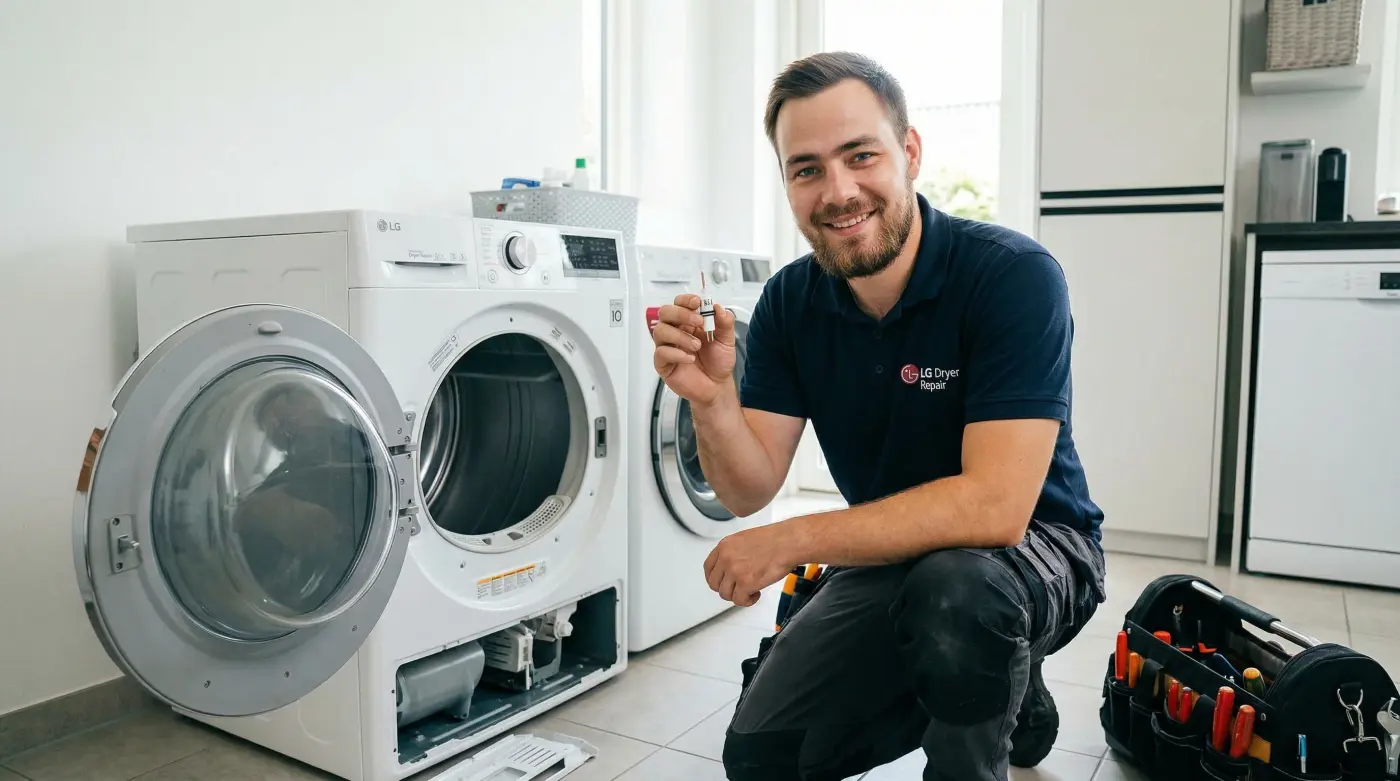
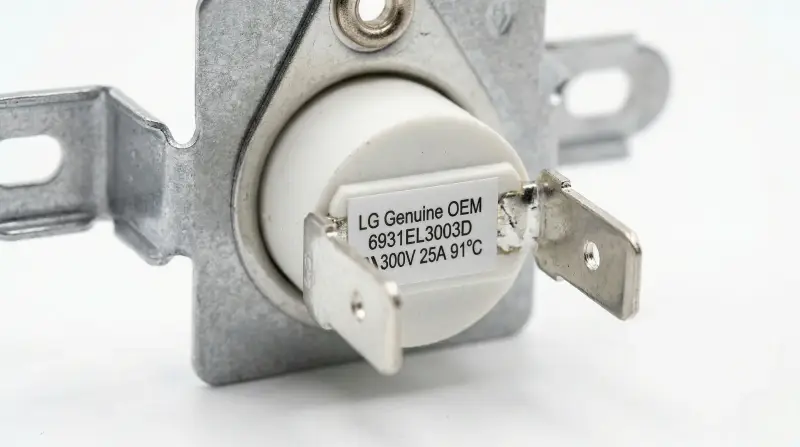
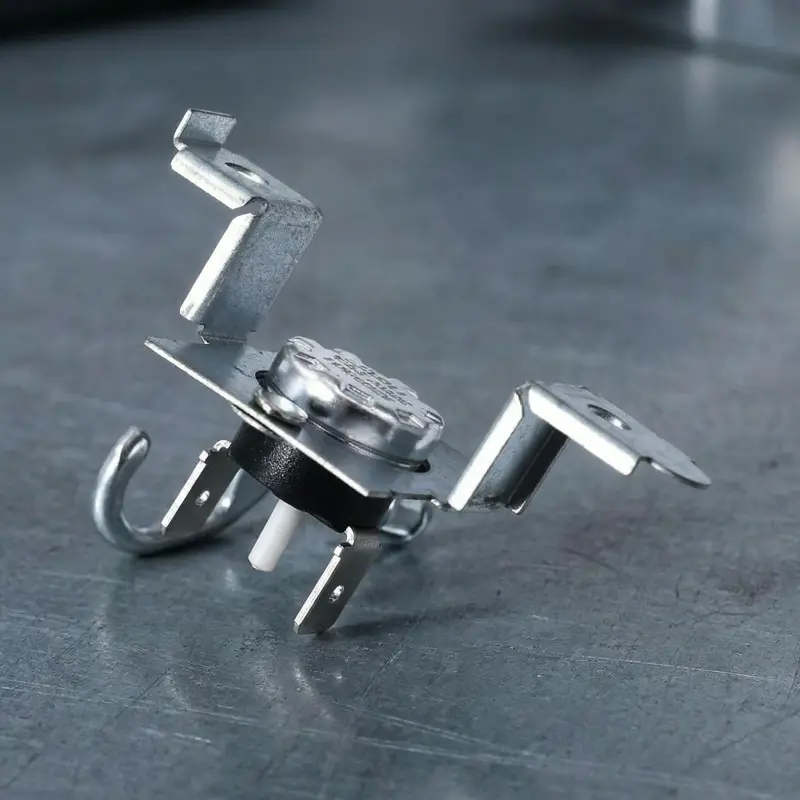
Replacing an LG dryer thermal fuse (part #6931EL3003D on most DLEX and DLGX models) runs $280–350 total and takes our techs about 45–75 minutes — the OEM fuse itself is only $15–30, the rest is labor plus clearing the clogged vent that blew it. Our LG Dryer Repair techs confirm the fuse reads open with a multimeter before replacing it — call (323) 990-7550.
Out of everything we replace on LG dryers, the thermal fuse is the repair that surprises people most. It's a tiny part — costs almost nothing — but when it blows, the dryer goes completely dead or stops heating entirely. We've had customers in Pasadena and Beverly Hills tell us they were already pricing new dryers before they called us, and we had them back up and running in under an hour for $280. If your LG dryer isn't heating but everything else seems normal, this is the first place we look. Last week in Beverly Hills — DLGX5001V, three years old — the fuse had blown because the vent hadn't been touched since the unit was installed. Forty minutes on-site, dryer back up before lunch.
What the Thermal Fuse Does and Why It Blows
Before we replace the fuse, our LG Dryer Repair techs check the heating element and the exhaust vent — most blown-fuse calls in LA, Orange, and Ventura County trace back to a clogged vent, so we clear that root cause first or the new fuse blows again within weeks.
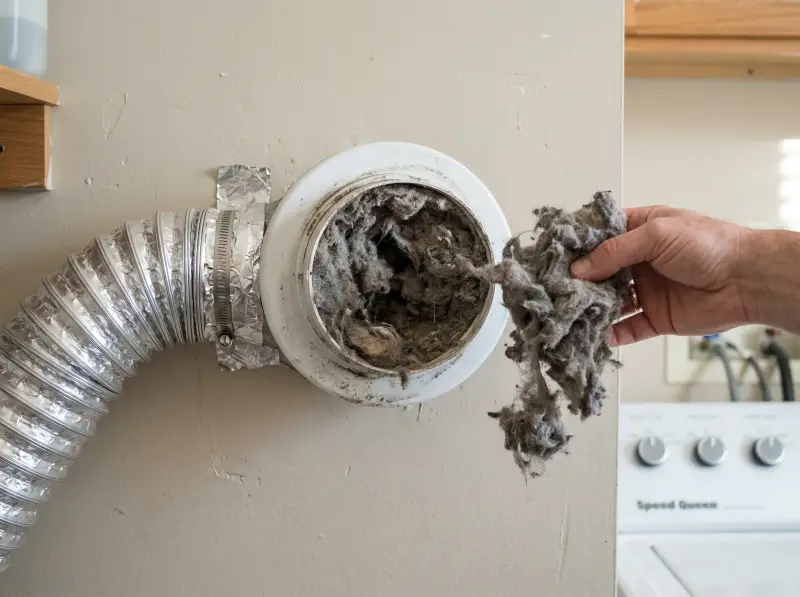
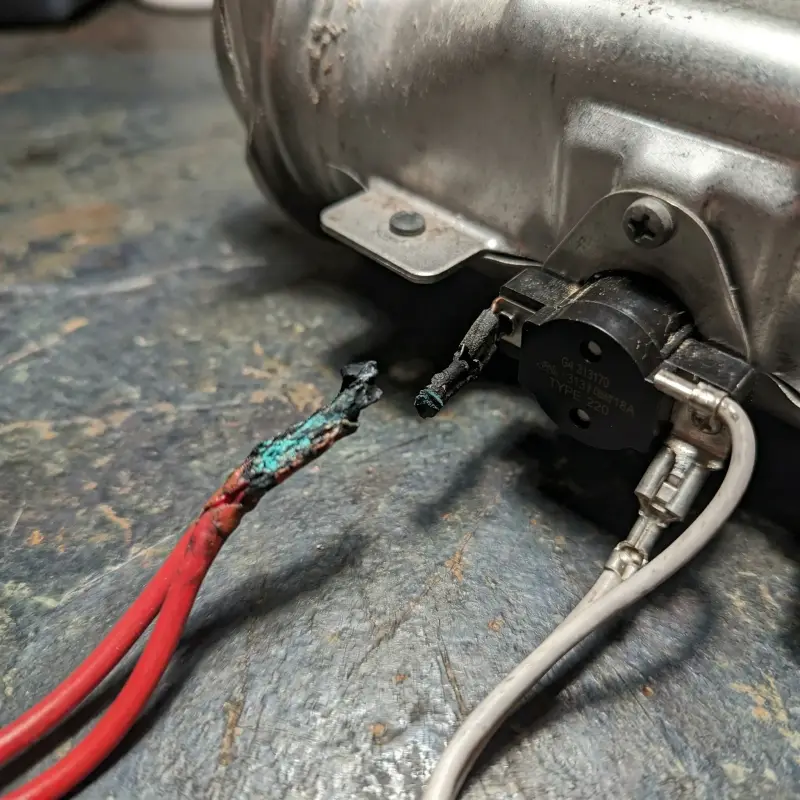
The thermal fuse sits on the blower housing in the exhaust path and acts as a one-shot safety device. If the temperature inside the dryer gets too high — usually because the vent is clogged and hot air has nowhere to go — the fuse blows permanently and cuts power to the heating circuit. It's designed to do exactly that. It's protecting you from a potential fire.
The problem is it doesn't reset. Once it's blown, the dryer won't heat again until someone replaces it. And if you replace it without fixing the reason it blew — the clogged vent — the new one goes within weeks. We've taken calls from people who had their thermal fuse replaced by someone else, twice, and it kept happening because nobody touched the vent. That's not a repair, that's a pattern.
What It Looks Like When the Fuse Is Gone
The classic thermal fuse call: dryer runs a full cycle, drum spins, timer counts down, everything sounds completely normal — clothes come out cold and wet. Zero heat, full mechanical function. That pattern, especially on LG DLGX and DLEX models, points straight to the fuse on the blower housing before we even open the machine.
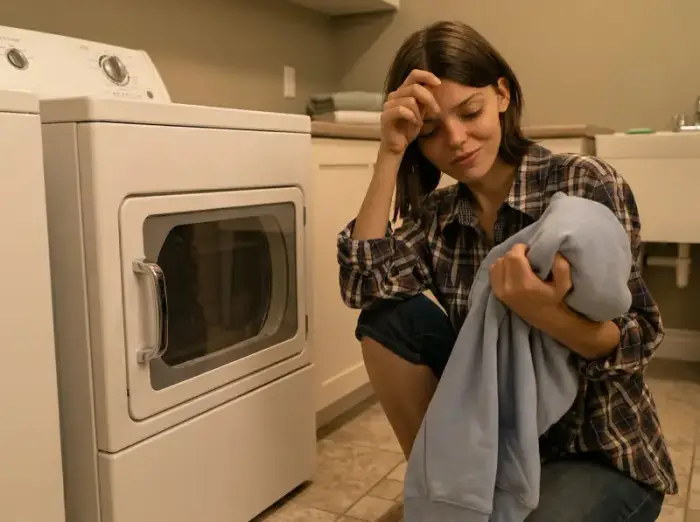
On some LG models the fuse is wired into the start circuit, not just the heat circuit, so a blown fuse can leave you with a dryer that won't start at all. Customers assume it's the control board — we show up, test the fuse in two minutes, it's open, done. We've also seen cases where the dryer stops mid-cycle with an error code and the fuse is quietly failing before it gives out completely. If your dryer has been running extra hot lately or clothes have been coming out hotter than usual, that's a warning sign worth paying attention to.
How We Diagnose and Fix It
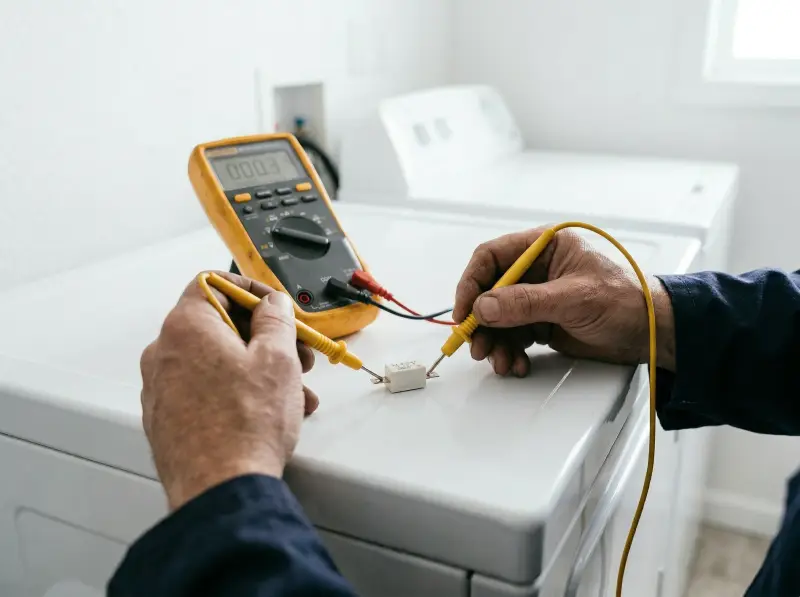
First thing we do on a no-heat call is pull a multimeter reading on the fuse — a blown fuse reads open, no continuity. Takes two minutes and tells us definitively whether we're dealing with the fuse, the heating element, or something else. We test before we replace anything. We've saved customers money more than once by finding it was actually the element rather than the fuse, or the other way around. Guessing and swapping parts is not how we work.
Once we confirm the fuse is blown, we pull the rear or top panel depending on the model, disconnect the old fuse from the blower housing, and install the new OEM part. While we're in there we check the high-limit thermostat — it sits right next to the fuse and fails for the same reasons. Catching it now is a minor add-on; missing it means a callback.
Before we leave, we inspect and clear the exhaust vent. Every single time. On thermal fuse jobs this isn't optional — it's the whole point. If we don't fix the airflow problem, we're just resetting the clock on the same failure. We check the vent from inside and verify flow at the exterior outlet. If there's restriction, we clear it. That's included in the job, not a separate line item.
What It Costs
Thermal fuse replacement runs $280–350 total for most LG dryers. The OEM fuse is $15–30 depending on the specific model. Labor is $200–250. The $65 diagnostic fee comes off when you approve the repair — so you're not paying extra on top of the job price for us to figure out what's wrong.
If we find the vent needs cleaning on top of the fuse, we handle it in the same visit at no extra charge. It's the same problem. We don't split it into a separate service call to pad the bill.
For comparison, if testing shows the issue is actually the heating element rather than the fuse, that repair runs $300–380. We'll know which one it is before we start replacing parts, and we'll walk you through the estimate either way.
Every invoice we send includes a 10% discount code for your next service call. It's our way of saying thanks to returning customers — the code never expires and applies to any LG dryer repair we do at your home.
LG Models We Work On
We replace thermal fuses on the full LG dryer lineup — DLGX series, DLEX series, DLE, DLG, and LG Signature models. Both gas and electric. The correct fuse part number varies by model, so we confirm the spec before we arrive. If you have your model number handy when you call, we can tell you right away whether we have the part on the truck.
Los Angeles County, Orange County, Ventura County
Our technicians cover all three counties. Los Angeles County — Beverly Hills, Santa Monica, West Hollywood, Pasadena, Burbank, Glendale, Long Beach, Torrance, Malibu, Calabasas. Orange County — Irvine, Newport Beach, Laguna Beach, Mission Viejo, Yorba Linda, Laguna Niguel. Ventura County — Thousand Oaks, Moorpark, Westlake Village, Camarillo, Simi Valley, Newbury Park.
Monday through Saturday 8am–7pm, Sunday 9am–5pm. Same-day appointments available, most areas within 2–4 hours of your call.
Related repairs: Heating Element Replacement · Drum Roller Replacement · Full Pricing Breakdown
Questions We Get on These Calls
Can I replace the thermal fuse myself?
Mechanically it's doable — the fuse itself is not a complex part to swap. The issue is two things: confirming it's actually the fuse and not the element or thermostat (you need a multimeter and need to know what you're testing), and finding and fixing why it blew in the first place. If you skip the vent, the new fuse blows again quickly. If you're comfortable with appliance repair and have the tools, go for it. If not, the cost of getting it done right once is worth it.
Why did the thermal fuse blow?
Restricted exhaust airflow is the number one cause — a clogged lint trap, a kinked duct, or a vent that hasn't been cleaned in years. Sometimes it's a failing cycling thermostat that let the dryer run too hot over time. We check both when we come out and address whatever we find.
How long does the repair take?
Usually 45–60 minutes on-site — diagnosis, replacement, vent check, and a full test cycle at the end. We don't call the job done until we've seen it heat properly.
Will my dryer work exactly like before?
Yes. The thermal fuse is a protection device, not something that affects dryer performance when it's working. Once it's replaced and the underlying cause is fixed, the dryer runs exactly as it did before the failure.
How often do thermal fuses need to be replaced?
A properly functioning dryer with clean venting should never blow a thermal fuse under normal conditions. If yours has blown more than once, that's not bad luck — there's an underlying problem with airflow or temperature regulation that needs to be found and fixed. Repeated fuse failures mean repeated calls, which nobody wants.
Can you come today?
Yes — call (323) 990-7550. Same-day service is available across Los Angeles County, Orange County, and Ventura County, typically within 2–4 hours of your call.
Is it worth replacing the thermal fuse or buying a new dryer?
Almost always worth replacing — at $280–350 it's one of the least expensive LG dryer repairs, well under 25% of a new dryer ($800–1,500). On a machine under 10 years old with the fuse as the only issue it's an easy call, and the $65 diagnostic is waived when you approve the repair. We're licensed with the Bureau of Household Goods and Services (#49573).
How do I know if it's the thermal fuse or the heating element?
Both cause zero heat with the drum spinning normally. Our techs test each with a multimeter — the thermal fuse reads open when blown, the element reads with partial or no continuity. We test the fuse first because it's more common and cheaper ($280–350 vs $300–380 for the element), so you don't pay element prices for a blown fuse.